


The Artist
Bry Sharland
Meet Bry Sharland
Bry Sharland is an artist and art teacher who grew up in Bridgewater, Massachusetts. He attended Massachusetts College of Art and Bridgewater State University as an undergraduate and holds master’s degrees from Endicott College and Fitchburg State University.
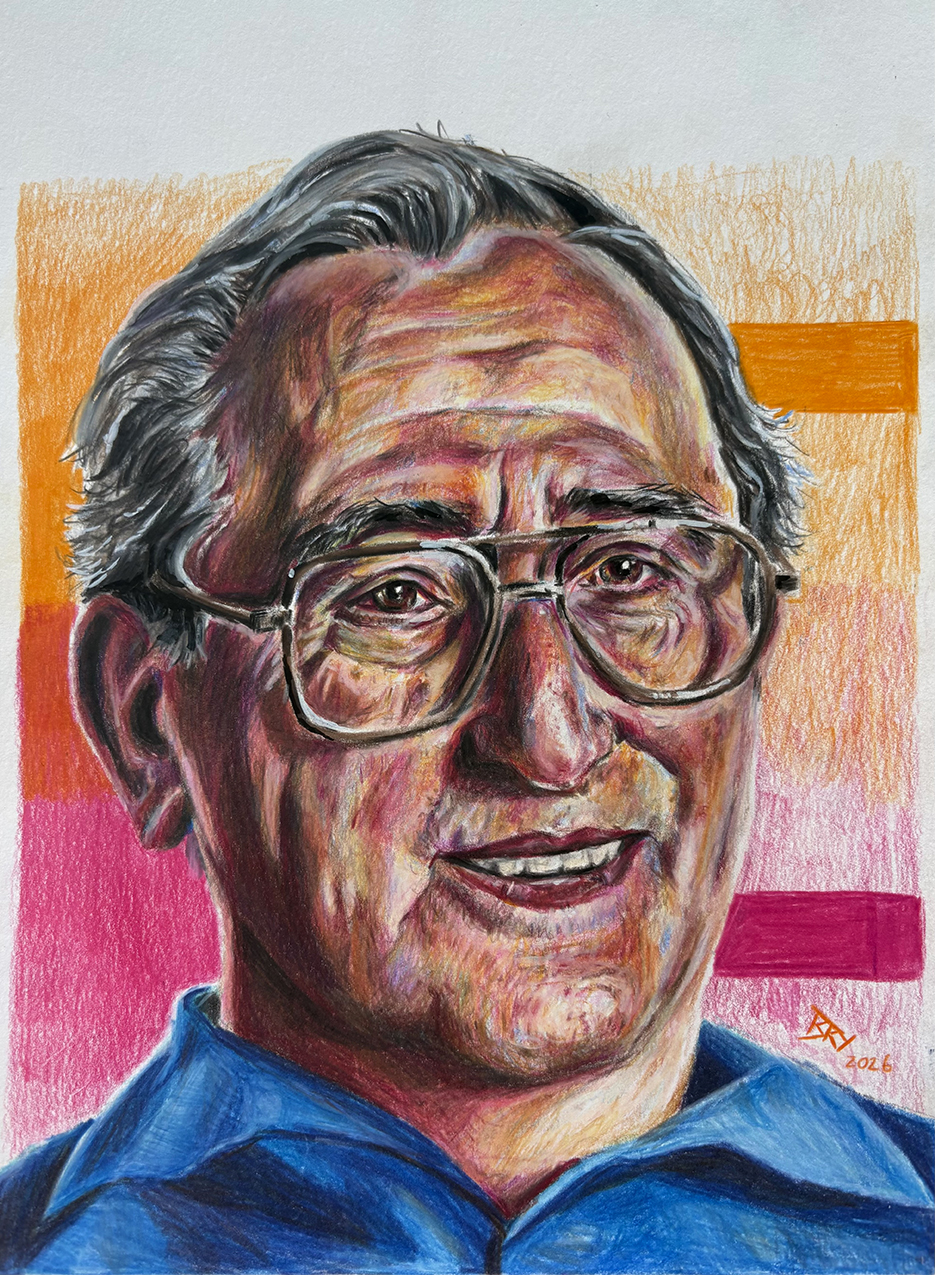
Bry’s artwork focuses heavily on portraiture and the use of bright, saturated, and often neon color. He primarily works in colored pencil, acrylic paint, and oil paint. His artistic inspirations include John Singer Sargent, Jan Duursema, and Owen Rival.
Bry is the creator of the Pink Triangle Portraits Project, an ongoing quest to create a portrait of every photographed queer victim of the Nazi regime and Paragraph 175. Each portrait is accompanied by researched information about the individual depicted.
Through these portraits, Bry hopes to bring attention to people whose stories have received too little recognition and encourage viewers to consider both the history of LGBTQ+ persecution and the continuing vulnerability of LGBTQ+ rights around the world.
Where it began
In sophomore year of high school, we were learning about WWII and the holocaust. Our textbook and teacher only spoke about Jewish victims. I had been learning about queer victims online and asked if I could teach about it. Graciously, my teacher let me and I taught about what I had learned to the class. This began the spark of the project. As leader of the Gay Straight Alliance at B-R, (Bridgewater-Raynham) I created a survey to be given to students that included questions about the safety of queer students but also if they were aware of Nazi persecution of queer people. I also made posters that highlighted lesser known victim groups such as disabled people, Jehovah’s Witnesses, and the Roma and Sinti people. In college I took German to help start my research.
From sketches and lists
The project began as sketches and lists. Every time I found a new pink triangle prisoner I would write down their name and information on the sheet to the right. The more people I found, the more I learned about the history behind it all, and parallels to queer peoples’ treatment in other time periods and places. I had started with just the 6 survivors interviewed in the film Paragraph 175; now I have files and photos of over 600 queer individuals.
From “Fading” to queer joy and resistance
Early on for me, I focused on just the survivors who spoke out. This mainly portrayed the people as they were pictured in camp photos/outfits, or as is from police mugshots. I wanted to portray the fading of memory of this time in history and the toll it took on survivors. Eventually I found this to be too demoralizing and depressing, and the project changed focus.
To Queer Joy and Resistance To Queer Joy and Resistance
No more camp uniforms, ever! I began to show my subjects as real, in color, queer people as they should have been. I want to celebrate their lives for who they were, not just what dark things that happened to them.